


Pier Paolo Pasolini: the revolution made by a poet

Updated: May 2, 2022
Exhibition at Palazzo Ducale, Genoa, 30 November 2021 - 13 March 2022 - "I don't get emotional by pictures".

The very first photo that caught my eye as I entered the exhibition depicts a protest in a square, the central subject of which is a poster that stands out in the crowd with the words "let's not let them kill the poets". Killing, yes, because it was clear almost immediately that Pier Paolo Pasolini had been murdered, brutally, and then abandoned, left without any dignity. But this was not a murder like any other, the victim was a poet, a man of letters, a director, probably the most famous of the first post-war period in Italy.
I also read another sub-text, "let's not let them kill the poets", let's, who? us, the people, so loved and even revered by Pasolini, those on the edges of society, those living in the suburbs, take it upon themselves to defend culture, poetry and poets. This can certainly be considered Pasolini's great merit: he brought literature, cinema and poetry closer to layers of society who, without being accompanied without judgement as only he knew how to do, would never have even considered reading a book or an article, least of all being the main characters of a movie. There is a very simple reason for this: it is not a mere lack of interest, but the result of a generation of young people born in the early post-war period who have no social, family or emotional network to protect and guide them, but whose only task is to get through the day alive and possibly with something in their stomachs.
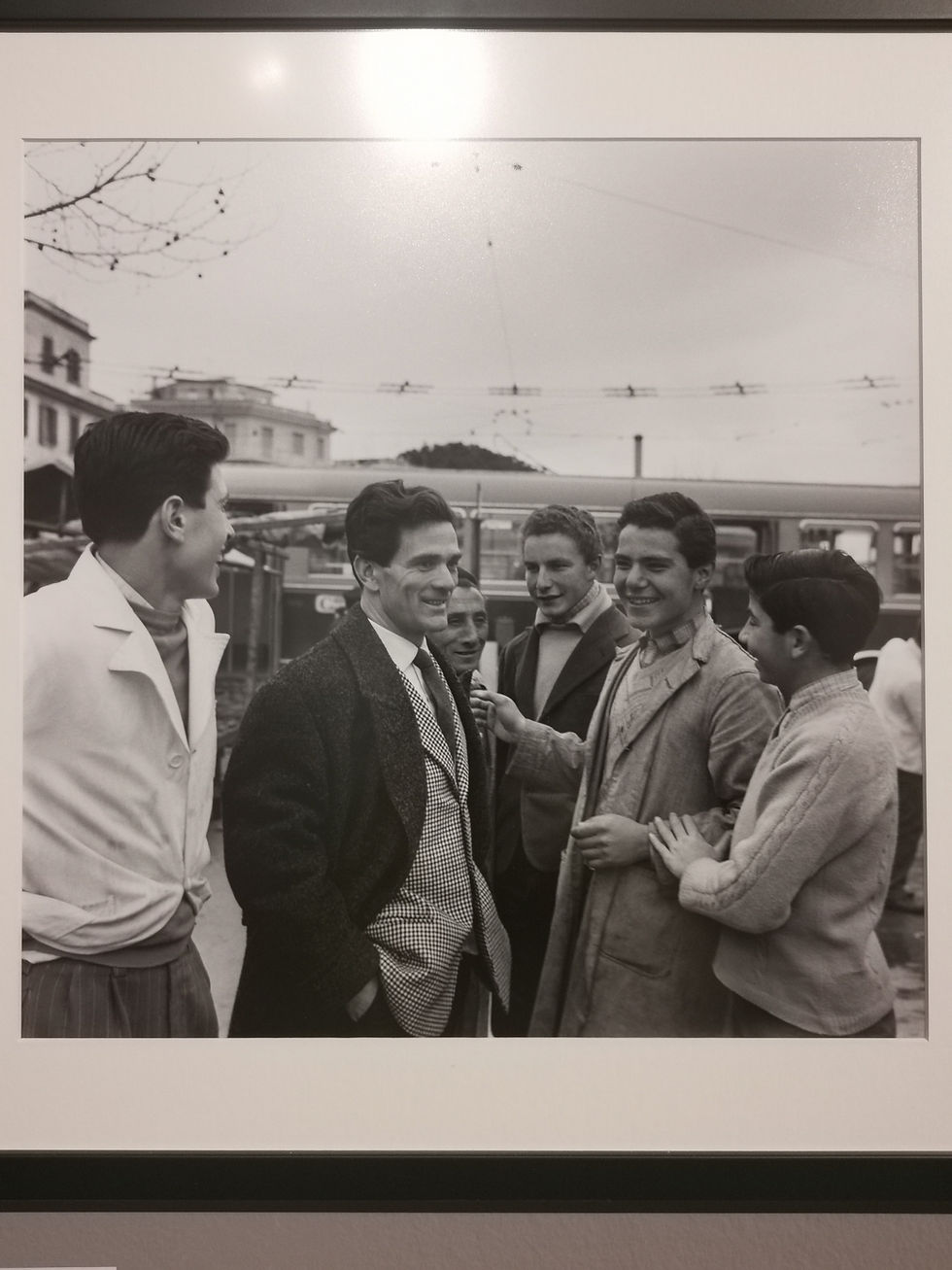
The Roman outskirts of the 1960s, as described and experienced by Pasolini, did not look like the nowadays suburbs, made up of so many anonymous buildings, but they were a middle ground between the countryside and the city, a Purgatory that very often took the form of Hell, unpaved roads that became torrents with the rains, more like swamps, improvised tin dwellings without electricity, running water or sanitation. Not to mention the major problem of overcrowding; the centre of Rome, which was slowly and painfully recovering from the Second World War, could take no more of the misery and poverty, and literally ignored the very serious situation in which many families found themselves just outside the city centre, the institutions above all.

In this historical context, Pasolini, a Roman by adoption, was literally thunderstruck by the humanity and vitality present in the suburbs, and began to spend more and more time with his boys, trying to offer them a second, a third, and often even a fourth opportunity, because you don't choose either the family or the place where you are born.
I am reminded of a parallel with a verse taken from a song by Italian rapper Marracash,
"not owning slows you down, but you can do it". (track title "Bastavano le briciole", album title "Marracash", 2008),
and this was exactly what Pasolini wanted to tell the world in his films set in the suburbs, with actors taken from the people, who very often represented themselves. Just the fact that they were acting, and not stealing or dealing, was a victory, and social and personal redemption.

Sporadically, he would go away from his beloved suburbs to take part, albeit sparingly, in Rome's social life, at the café Rosati, a historic meeting place for writers and intellectuals. From the shots of these rare social events, it is easy to perceive how Pasolini did not feel at the place he belonged but lived these meetings as a ticket to pay to be part of that caste.

Pasolini was an avowed homosexual, and his relationship with women was always very troubled and twisted.
He felt immense and totalitarian love for his mother, to the point of almost competing with his father for her attention. Pasolini himself, on this subject, showed moments of lucidity, in which he showed himself capable of a critical analysis of his morbid attachment to the mother figure, so much so as to denounce in one of his poems that, because of this unattainable feeling he had for her, he did not feel able to love anyone else, self destining himself to a life alone.
"You are the only one in the world who knows, of my heart, what it has always been, before any other love."


Photo taken at the exhibition of Pier Paolo Pasolini - 1) Ph. Sandro Becchetti - Rome 1971 - 2) Ph. Vittorio la Verde - Rome 1971
As declared by his friend Oriana Fallaci in her "Letter to Pier Paolo", Pasolini felt almost a hatred and strong resentment towards all other women, except for his mother, but this did not prevent him from having many female friends, even very close and intimate ones, first of all, his friendship with Laura Betti. Nevertheless, this ambivalent feeling towards women will accompany him to the end.

I feel extremely attracted to the figure of Pasolini as an artist. In such a difficult and tormented era of politically-motivated social turmoil and class struggle, Pasolini always remained true to himself, understanding that there could never be evolution without giving a voice to all the people, and without questioning the values that had already led to a world war. The solution is not homologation and the flattening of diversity.
I firmly believe that in order to decrease the gap between social classes, a process of education on a global level is the key to giving everyone the same possibilities, and not to make everyone equal. There is a huge difference.

Pasolini fought ignorance, savagery, racism, homophobia, neo-fascism using only one weapon: "the word", as he said in a rare interview, the written word can never be replaced by any photograph. Violence is the way to communicate for those who know no other way to express themselves.
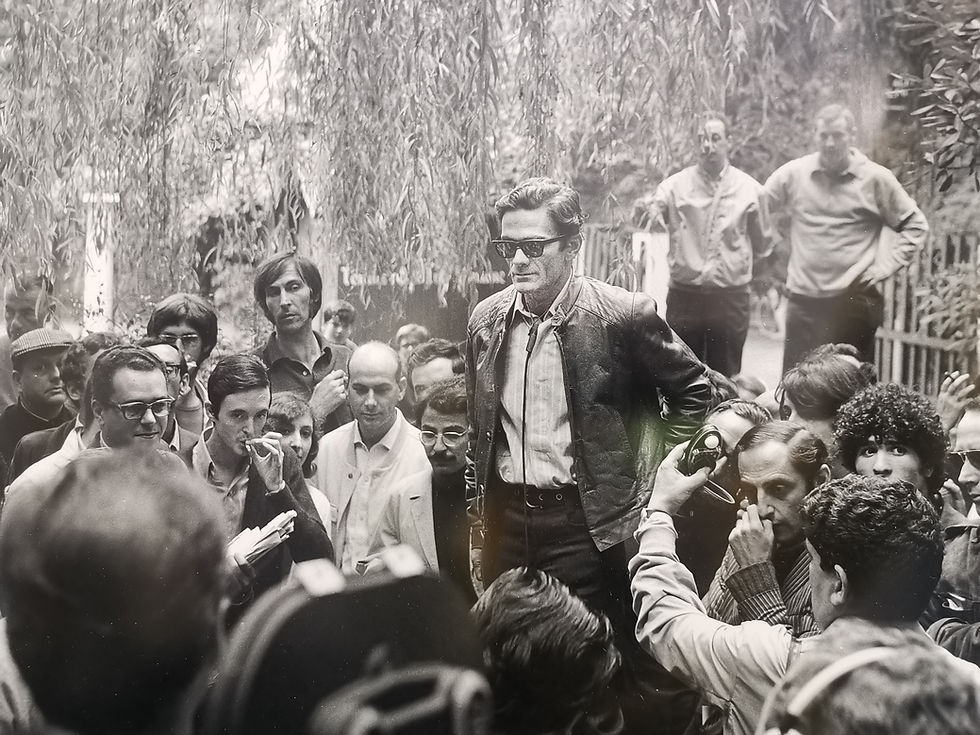
Culture makes you free. Let's never forget that.
If you're in Genoa, we highly recommend going to this exhibition, which will run until March 13, 2022, at Palazzo Ducale in Piazza Giacomo Matteotti 9, right in the historic center.
You can book and buy your tickets by clicking here.
Enjoy the exhibition!


Comments